
Why smart-card hardware wallets are quietly changing crypto custody
Whoa!
Smart-card hardware wallets are finally making seed phrases optional for many users.
I’ve been test-driving them for months and the UX is shockingly simple.
At first glance they feel like a fancy credit card, but they hide a lot of cryptography inside low-power secure elements that clamp down on private key export and interact with mobile apps over NFC or USB while keeping the secrets physically isolated from the phone or laptop.
This changes how non-technical people can hold crypto without memorizing strings of words they will inevitably lose.
Seriously?
Seed phrases were never meant for regular humans, honestly they were a developer workaround.
They work, sure, but they’re brittle—paper gets wet, PDFs get corrupted, and people forget passphrases.
On one hand they decentralize recovery, though actually they create a single catastrophic point of failure when someone writes down the phrase incorrectly or stores it in the cloud under a poorly chosen password, so the theoretical safety often evaporates in practice.
A smart card flips that model by keeping the private key inside tamper-resistant silicon and replacing recovery with options that are easier for real people to manage.
Hmm…
My instinct said this would be just another hardware fad, but the ergonomics proved otherwise.
I watched a friend set one up in five minutes while I fumbled with a 24-word backup.
Initially I thought the loss-resistance would be marginal, but then I watched the wallet offer social recovery and paired-device options that, combined with durable form factor and low cost, make losing access much less likely for everyday users.
I’m biased, but there’s something comforting about sliding a card into your wallet instead of hiding a scrap of paper in a shoebox.
Okay, so check this out—
Technical folks will nitpick about attack surfaces and supply chain risks.
True, the card’s secure element is only as trustworthy as its manufacturing process and firmware signing, and you shouldn’t trust a closed system blindly.
On the other hand, many designs use certified chips and open recovery protocols so the practical risk for users is smaller than the everyday risk of exposing mnemonic backups.
Oh, and by the way, I tested NFC pairing in a crowded coffee shop which—surprisingly—felt safer than manually typing a seed phrase on a public laptop.
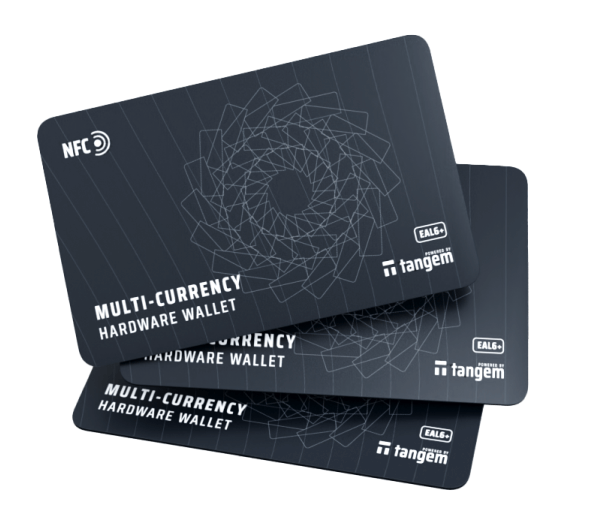
A pragmatic look at everyday security
Really?
Yes — and here’s the pragmatic part: for mass adoption we need tools people can carry.
A slim plastic or metal card that you can toss into a wallet removes friction while implementing real hardware-backed key storage, and companies like tangem hardware wallet have focused on that form-factor design with interesting trade-offs.
Initially I thought the ecosystem would force everyone into one vendor, but actually standards and interoperable apps are maturing, and that reduces lock-in risk over time.
There are limits though—no solution is magic, and backup, transfer, and long-term custody policies still need human attention.
Here’s the thing.
If you care about day-to-day usability without surrendering security, smart-card wallets deserve a serious look.
They trade the cognitive burden of memorizing 24 words for physical custody and technology trust, which is a sensible trade for most consumers though it isn’t perfect for large institutional cold storage needs where multi-sig in HSMs remains best practice.
I’m not 100% sure how insurance markets will price these devices, and that part bugs me—coverage lags policy innovation, and regulators are only starting to catch up.
Still, for people who want a pocket-friendly, resilient, and relatively cheap way to hold crypto, smart cards are a major step forward, and the UX improvements are finally approachable for mainstream users.
FAQ
How does a smart-card wallet replace a seed phrase?
Instead of exposing the full seed to the user, the card keeps the private key in a secure element and performs signing internally, so the seed never leaves the device.
Recovery can be handled via paired-device protocols, social recovery, or a hardware-backed backup, which many find easier than scribbling 24 words somewhere very very insecure.
Are smart-card wallets safe from cloning or theft?
The cards use tamper-resistant hardware and cryptographic checks to prevent key extraction, but supply chain risks and firmware integrity matter, so buy from reputable sources and follow safe setup practices.
There’s always somethin’ to consider—no tool is flawless, and you should test your backup flow before moving large balances…